Your mattress sees a lot of action, about eight hours every night, to be exact. Over time, it collects dead skin cells, dust mites, sweat, and the occasional mystery stain. If you’re noticing your sleep quality isn’t what it used to be, your mattress might be overdue for a serious refresh. While top cleaning services can handle the job professionally, deep cleaning your mattress at home is totally doable with the right approach. We’re breaking down the exact steps to get your sleep surface fresh, sanitized, and ready for quality rest.
Vacuum the Mattress Surface
Start by attaching the upholstery tool to your vacuum cleaner. Work in slow, overlapping passes from the top of the mattress down to the bottom, systematic coverage is key here. The seams, edges, and any creviced areas are where dust and debris love to hide, so hit those spots with extra attention. Switch to the crevice tool for the piping and tufted sections that your regular attachment can’t quite reach. A detachable handheld attachment works great for smaller, awkward spots. Take your time with this step, rushing through means leaving dirt behind. When you’re done, empty that dustbin right away so you’re not just redistributing the gross stuff you just vacuumed up.
Spot Treat Stains
Different stains need different game plans. Protein-based stains like blood or urine respond well to cold water mixed with an enzyme cleaner. Grab a clean cloth, apply your solution, and blot the stain gently, no rubbing, or you’ll just push it deeper into the fibers. Got grease or oil? Mix baking soda with a bit of water to form a paste, spread it on the stain, and let it sit for a few hours before vacuuming it off. Hydrogen peroxide handles tougher stains like wine or coffee, but test it on a hidden spot first because it can bleach certain fabrics. After treating any stain, make sure the area dries completely to avoid mildew issues down the road.
Deodorize With Baking Soda
Baking soda is your secret weapon for getting rid of funky smells without harsh chemicals. Strip all the bedding and pillows off your mattress first. Then grab your box of baking soda and go to town, sprinkle it generously across the entire surface. The longer you let it sit, the better it works, so aim for at least 30 minutes, though overnight is even better if you can swing it. The baking soda will pull odors right out of the mattress fabric. When time’s up, use your vacuum with the upholstery attachment to suck up every last bit of powder. For smells that won’t quit, just run through the process again until your mattress smells neutral.
Steam Clean the Mattress
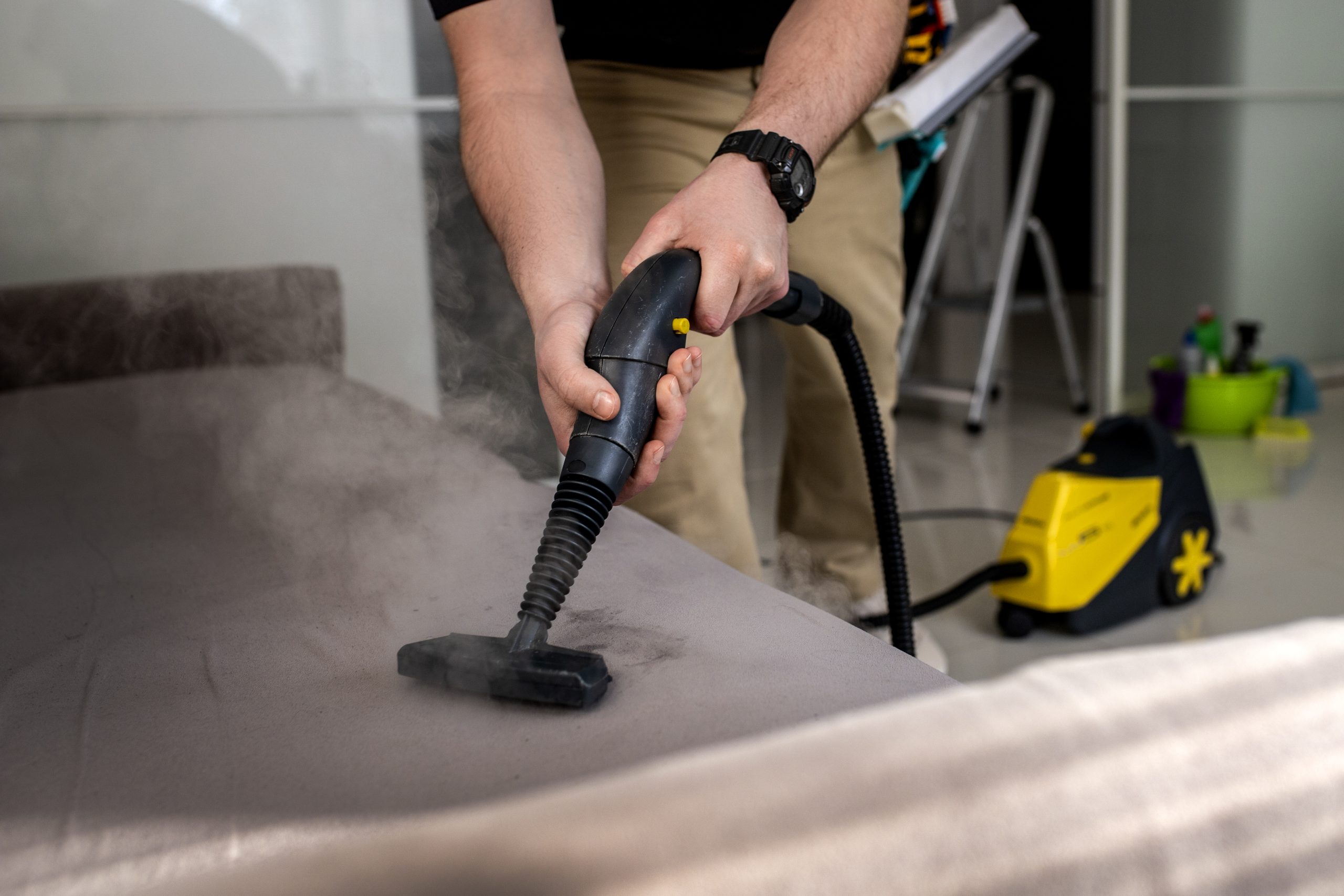
Steam cleaning takes sanitization to the next level by killing bacteria, dust mites, and allergens that vacuuming can’t touch. Fill your steam cleaner with water according to what the manual says, plug it in, and wait for it to heat up. Hold the nozzle a few inches above the mattress and move it slowly across the surface in steady, even passes. Don’t rush this part, you want the steam to penetrate the fabric and do its job. Give stained or heavily soiled areas extra passes to break down any remaining gunk. The most important part comes after: let the mattress dry completely before making the bed again. A damp mattress is an invitation for mildew, and trust me, you don’t want that.
Flip and Rotate the Mattress
Every three to six months, flip and rotate your mattress to prevent uneven wear and those annoying body impressions. Before you start, make sure your mattress is properly supported, you don’t want to damage it (or yourself) during the flip. Rotate it 180 degrees first so the head becomes the foot. If your mattress is double-sided, flip it over completely so you’re alternating which side you sleep on. Check your manufacturer’s instructions, though, because some newer mattresses aren’t designed to be flipped. Set a reminder on your phone so you don’t forget, out of sight, out of mind is real when it comes to mattress maintenance.
Protect With a Mattress Cover
A quality mattress cover is basically insurance for all the work you just put in. Look for one that’s waterproof to block spills and accidents before they soak through. Hypoallergenic covers help keep allergens at bay, which means better breathing and better sleep. Make sure whatever you choose fits snugly and won’t slide around while you sleep; nothing’s more annoying than waking up to a bunched-up cover. Wash it regularly along with your sheets to maintain that clean sleep environment. Yeah, it’s an extra expense upfront, but it’ll extend your mattress’s lifespan and save you from having to deep clean as often.
Related Topics: